In this article17
- What Is Custom Website Design?
- What Is Template Website Design?
- Design Flexibility
- Unique Branding
- SEO Performance
- Website Speed
- User Experience
- Scalability
- Security
- Cost Comparison
- Maintenance
- Custom Website vs Template Website
- Which Option Is Better for Small Businesses?
- Why Businesses Choose DigiFlav
- Why Custom Websites Deliver Better ROI
- Conclusion
- FAQs
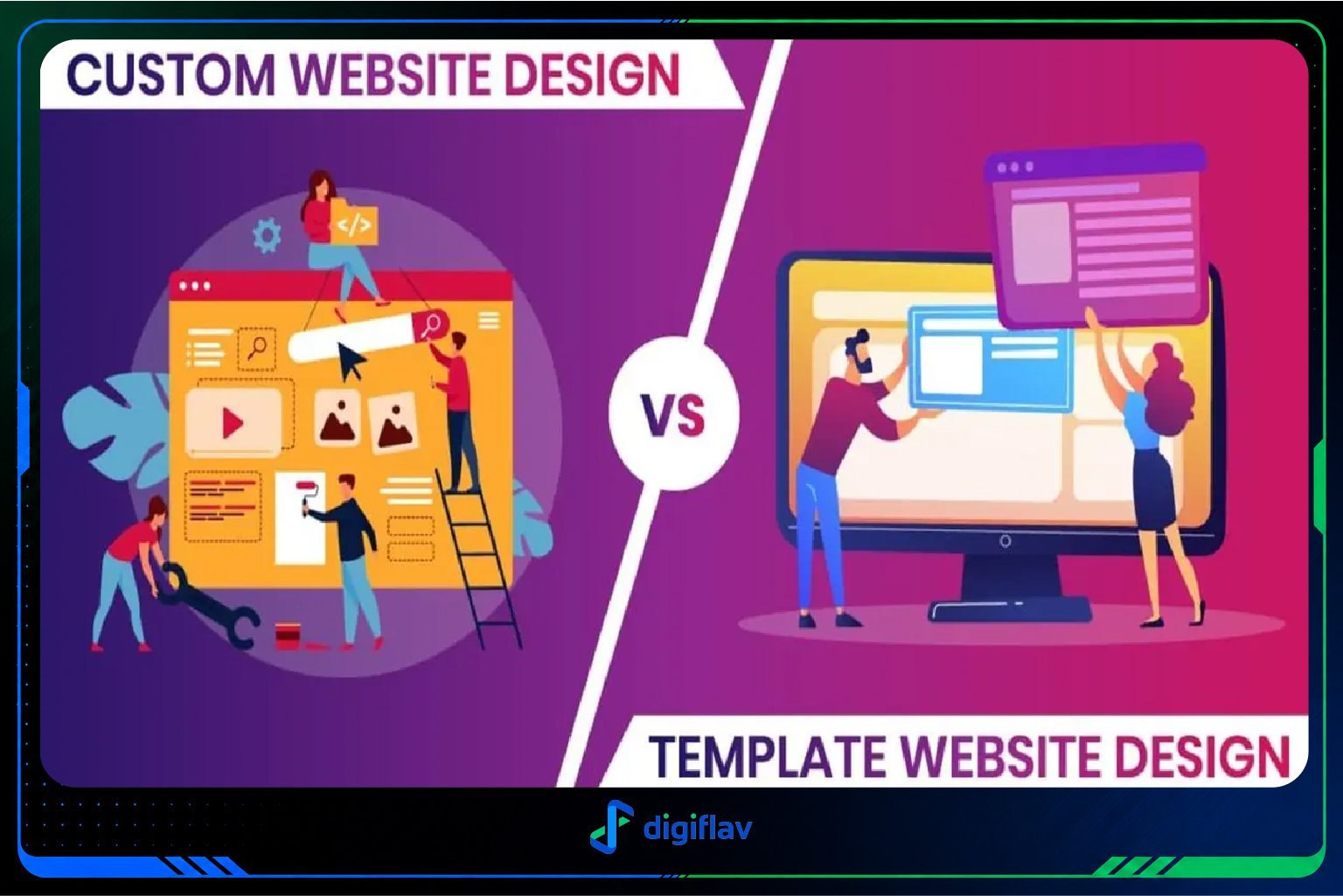
When building a business website, one of the first decisions you’ll face is whether to choose a custom website design or a template website design. While both options can help you establish an online presence, they offer very different levels of flexibility, performance, and long-term value.
Many startups choose templates because they are quick and affordable. However, as businesses grow, they often discover that templates limit customization, branding, and scalability. On the other hand, custom website design requires a larger initial investment but provides greater flexibility, better user experience, and stronger long-term results.
In 2026, where online competition continues to increase, choosing the right website solution can directly impact your brand reputation, search rankings, lead generation, and business growth.
This guide compares custom website design and template website design to help you make the right decision.
What Is Custom Website Design?
Custom website design involves creating a website from scratch based on your business goals, branding, and customer requirements.
Instead of using a pre-designed layout, every page is built specifically for your business.
A custom website typically includes:
- Unique layouts
- Custom branding
- Tailored functionality
- Better performance
- SEO-friendly architecture
- Personalized user experience
Every element is designed to support your business objectives.
What Is Template Website Design?
Template website design uses pre-built themes or layouts that businesses can customize with their own content, images, and branding.
Website builders and marketplaces provide thousands of templates for various industries.
Templates are commonly used because they are:
- Affordable
- Easy to launch
- Beginner-friendly
- Quick to customize
However, they often come with design and functionality limitations.
Design Flexibility
One of the biggest differences between custom and template websites is flexibility.
Custom Website Design
Custom websites allow complete control over:
- Layout
- Navigation
- Branding
- User experience
- Features
- Animations
Every design decision supports your business goals.
Template Website Design
Templates provide predefined layouts that can only be modified within certain limits.
Changing major sections often requires workarounds or advanced customization.
Winner
Custom Website Design
Unique Branding
Your website should reflect your brand identity.
Custom websites allow businesses to create:
- Unique color systems
- Custom typography
- Personalized graphics
- Original page layouts
- Branded user experiences
Businesses investing in Professional Logo Design Services and Branding Services often benefit significantly from custom website development because every branding element can be integrated consistently.
Templates frequently look similar to thousands of other websites.
SEO Performance
Search Engine Optimization depends heavily on website structure and performance.
Custom websites are built with SEO best practices from the beginning.
Benefits include:
- Clean code
- Faster loading
- Better URL structure
- Schema markup
- Internal linking
- Mobile optimization
Businesses investing in SEO Services generally achieve better long-term results with custom websites.
Templates often include unnecessary code that can reduce performance.
Website Speed
Website speed influences:
- User experience
- Search rankings
- Conversion rates
Custom websites only include features your business actually needs.
Templates often load:
- Extra scripts
- Unused plugins
- Unnecessary stylesheets
These additional resources can slow website performance.
A faster website creates happier visitors and better SEO.
User Experience
User experience (UX) plays a major role in converting visitors into customers.
Custom websites allow developers to create:
- Better navigation
- Clear user journeys
- Strategic call-to-actions
- Personalized layouts
Every page is designed around customer behavior.
Templates are designed for general audiences rather than specific business goals.
Scalability
Businesses evolve over time.
You may eventually need:
- Ecommerce functionality
- Booking systems
- Membership portals
- Customer dashboards
- CRM integrations
- Marketing automation
Custom websites are built to scale.
Templates often require significant modifications—or complete redesigns—as businesses grow.
Security
Security is another important consideration.
Custom websites generally contain:
- Cleaner code
- Fewer unnecessary plugins
- Better security practices
- Greater control over updates
Template websites often rely on numerous third-party plugins, increasing potential security risks.
Cost Comparison
Many businesses choose templates because of lower upfront costs.
However, long-term expenses often tell a different story.
Template Website Costs
- Theme purchase
- Plugin licenses
- Custom modifications
- Performance fixes
- Future redesigns
Custom Website Costs
- Initial development
- Ongoing maintenance
- Optional feature enhancements
Although custom websites require a higher initial investment, they usually provide greater long-term value.
Maintenance
Every website requires maintenance.
Template websites often need:
- Frequent plugin updates
- Compatibility fixes
- Theme updates
Custom websites usually have fewer unnecessary components, making maintenance more manageable when developed correctly.
Custom Website vs Template Website
| Feature | Custom Website | Template Website |
|---|---|---|
| Unique Design | ✅ Yes | ❌ Limited |
| Branding | ✅ Fully Custom | ⚠️ Limited |
| SEO | ✅ Excellent | Good |
| Website Speed | ✅ Optimized | Varies |
| Scalability | ✅ Unlimited | Limited |
| User Experience | ✅ Personalized | Generic |
| Security | ✅ Better Control | Plugin Dependent |
| Long-Term Value | ✅ High | Moderate |
Which Option Is Better for Small Businesses?
The answer depends on your business goals.
A template website may work if:
- You need a simple website quickly.
- You have a limited budget.
- You don’t expect significant growth.
A custom website is ideal if:
- You want stronger branding.
- SEO is important.
- You need custom functionality.
- You plan to scale your business.
- You want better conversions.
- You want complete ownership.
Growing businesses generally benefit more from custom website development.
Why Businesses Choose DigiFlav
DigiFlav specializes in creating custom websites that combine beautiful design, technical excellence, and marketing performance.
Services include:
- Professional Web Design Services
- Custom WordPress Development
- SEO Services
- Branding Services
- Professional Logo Design Services
- Digital Marketing Services
Rather than using one-size-fits-all templates, DigiFlav builds websites that reflect each business’s goals, audience, and brand identity.
Businesses can also strengthen their online presence by combining custom website development with professional branding and SEO strategies to maximize long-term growth.
Why Custom Websites Deliver Better ROI
A professionally developed custom website often produces better long-term returns by helping businesses:
- Rank higher on Google
- Generate more qualified leads
- Improve customer trust
- Increase conversion rates
- Strengthen brand identity
- Support future business growth
Instead of rebuilding your website every few years, a custom solution evolves alongside your business.
Conclusion
Both custom website design and template website design have their advantages, but they serve different purposes. Templates provide a quick and affordable starting point, while custom websites offer flexibility, scalability, better SEO, and stronger branding.
If your business is focused on long-term growth, investing in a custom website is often the smarter decision. A professionally developed website creates a better user experience, supports digital marketing efforts, and helps your business stand out in an increasingly competitive online market.
For businesses looking to build a website that delivers lasting value, DigiFlav provides custom web design solutions tailored to modern business needs.
FAQs
1. What is the difference between a custom website and a template website?
A custom website is built specifically for your business, while a template website uses a pre-designed layout with limited customization.
2. Which option is better for SEO?
Custom website design generally provides better SEO because developers have greater control over performance, structure, and optimization.
3. Is a custom website worth the investment?
Yes. Custom websites offer better branding, scalability, user experience, and long-term business value.
4. Does DigiFlav build custom websites?
Yes. DigiFlav provides Custom Website Design, WordPress Development, SEO Services, Branding, and Digital Marketing Solutions for businesses of all sizes.
5. Can I upgrade a template website to a custom website later?
Yes. Many businesses start with templates and later migrate to custom websites as their business grows and their requirements become more advanced.
Planning a website, brand or SEO push?
Talk to the team behind this guide. We’ll map the fastest route for your business — no obligation.
✓ Response within 1 business day
✓ Free 45-minute discovery call
✓ Fixed estimates — no surprise invoices