
In this article19
- What Is Branding?
- What Is Marketing?
- Branding Creates Identity, Marketing Creates Visibility
- Branding vs Marketing: Side-by-Side Comparison
- Why Branding Comes First
- How Branding Influences Customer Decisions
- Marketing Drives Business Growth
- Branding Creates Long-Term Value
- Marketing Delivers Measurable Results
- Can You Have Marketing Without Branding?
- Can You Have Branding Without Marketing?
- How Branding and Marketing Work Together
- Common Branding Mistakes
- Common Marketing Mistakes
- Which Should Small Businesses Prioritize?
- Why Businesses Choose DigiFlav
- Building a Complete Growth Strategy
- Conclusion
- FAQs
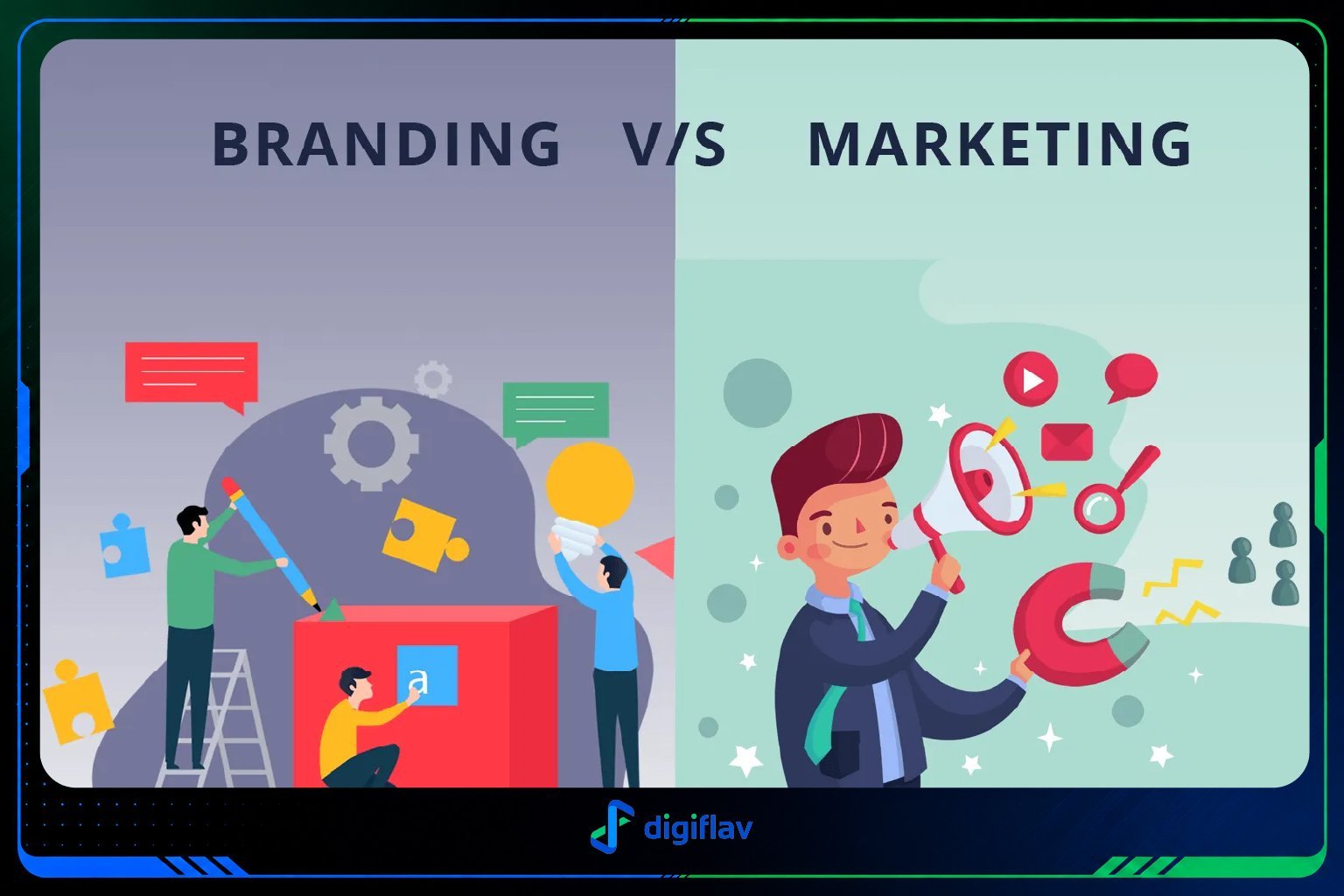
Many business owners use the terms branding and marketing interchangeably. While both are essential for business growth, they serve completely different purposes. Branding defines who you are as a business, while marketing is how you promote your products or services to your audience.
Understanding the difference between branding and marketing helps businesses make smarter decisions, create stronger customer relationships, and build sustainable growth. In today’s competitive digital landscape, businesses need both a compelling brand identity and effective marketing strategies to stand out.
In this guide, we’ll explain the key differences between branding and marketing, why both matter, and how they work together to create long-term business success.
What Is Branding?
Branding is the process of creating a unique identity for your business. It shapes how customers perceive your company and what they remember about it.
Branding goes beyond a logo. It includes every visual and emotional element that represents your business.
A strong brand identity includes:
- Professional logo
- Brand colors
- Typography
- Brand voice
- Mission and values
- Website design
- Customer experience
- Brand messaging
Branding answers one important question:
“Who are you as a business?”
What Is Marketing?
Marketing is the process of promoting your products or services to attract customers and generate sales.
Marketing focuses on driving awareness, traffic, leads, and conversions through different channels.
Common marketing activities include:
- Search Engine Optimization (SEO)
- Social Media Marketing
- Google Ads
- Email Marketing
- Content Marketing
- Pay-Per-Click Advertising
- Video Marketing
- Influencer Marketing
Marketing answers another important question:
“How will people discover your business?”
Branding Creates Identity, Marketing Creates Visibility
One of the easiest ways to understand the difference is:
Branding tells people who you are.
Marketing tells people why they should choose you.
Without branding, marketing campaigns often lack consistency.
Without marketing, even the strongest brand remains invisible.
The two work together rather than competing with one another.
Branding vs Marketing: Side-by-Side Comparison
| Branding | Marketing |
|---|---|
| Builds identity | Promotes products and services |
| Long-term strategy | Short-term campaigns |
| Creates trust | Generates leads |
| Shapes perception | Drives sales |
| Focuses on loyalty | Focuses on acquisition |
| Defines business personality | Communicates offers |
Both are equally important but serve different business objectives.
Why Branding Comes First
Many businesses begin advertising before establishing a clear brand identity.
This often leads to inconsistent messaging and weaker customer trust.
Strong branding creates a solid foundation before marketing begins.
Customers are more likely to remember businesses that have:
- Consistent visuals
- Clear messaging
- Professional design
- Strong positioning
Before investing heavily in advertising, businesses should establish a recognizable identity.
How Branding Influences Customer Decisions
Customers don’t buy products alone.
They buy trust, reputation, and experiences.
Branding influences customer perception through:
- Professional appearance
- Emotional connection
- Consistency
- Credibility
- Recognition
Think about globally recognized brands.
Customers often choose them because they trust the brand—not simply because of the product itself.
Marketing Drives Business Growth
Once branding has been established, marketing helps businesses reach their audience.
Marketing activities help generate:
- Website traffic
- Phone calls
- Sales
- Leads
- Appointments
- Brand awareness
Effective marketing ensures that the right people discover your business at the right time.
Branding Creates Long-Term Value
Marketing campaigns may end after weeks or months.
Branding continues working for years.
Strong branding provides long-term benefits including:
- Customer loyalty
- Better referrals
- Premium pricing opportunities
- Increased brand recognition
- Competitive differentiation
A memorable brand becomes one of a company’s most valuable business assets.
Marketing Delivers Measurable Results
Unlike branding, marketing often produces measurable performance data.
Businesses can monitor:
- Website traffic
- Conversion rates
- Cost per lead
- Return on investment
- Search rankings
- Advertising performance
This allows businesses to optimize campaigns for better results.
Can You Have Marketing Without Branding?
Technically, yes.
Successfully, no.
Businesses without branding often experience:
- Lower trust
- Poor customer recall
- Weak differentiation
- Lower conversion rates
Customers may see your advertisements but forget your business shortly afterward.
Branding gives marketing meaning.
Can You Have Branding Without Marketing?
Yes.
However, customers may never discover your business.
Even the strongest brand requires marketing to:
- Reach new audiences
- Generate awareness
- Increase sales
- Grow market share
Branding creates the destination.
Marketing brings people there.
How Branding and Marketing Work Together
Successful businesses integrate both strategies.
For example:
A professional logo builds recognition.
SEO helps customers find your website.
A consistent website builds trust.
Social media creates engagement.
Email marketing nurtures relationships.
Together they create a complete customer journey.
Common Branding Mistakes
Businesses often weaken their brand by:
- Frequently changing logos
- Using inconsistent colors
- Copying competitors
- Having unclear messaging
- Ignoring customer experience
Consistency is one of the most important branding principles.
Common Marketing Mistakes
Marketing campaigns become less effective when businesses:
- Target the wrong audience
- Ignore SEO
- Publish inconsistent content
- Fail to track performance
- Run advertisements without strategy
Successful marketing requires continuous optimization.
Which Should Small Businesses Prioritize?
Small businesses often have limited budgets.
The ideal approach is:
Step 1
Build your brand.
Create:
- Professional logo
- Brand identity
- Website
- Messaging
- Brand guidelines
Step 2
Launch marketing campaigns.
Focus on:
- SEO
- Content Marketing
- Social Media
- Paid Advertising
- Email Marketing
Strong branding makes every marketing dollar more effective.
Why Businesses Choose DigiFlav
DigiFlav helps businesses combine strategic branding with performance-driven digital marketing.
Services include:
- Professional Logo Design Services
- Brand Identity Development
- Custom Website Design Services
- WordPress Website Development
- Search Engine Optimization (SEO)
- Digital Marketing Services
Instead of treating branding and marketing as separate activities, DigiFlav creates integrated strategies that help businesses build trust while generating measurable results.
Building a Complete Growth Strategy
Businesses that combine branding and marketing often experience:
- Better customer trust
- Higher conversion rates
- Stronger online visibility
- Increased customer loyalty
- Better long-term ROI
Branding attracts attention.
Marketing creates opportunities.
Together they build sustainable business growth.
Conclusion
Branding and marketing are not competitors—they are partners. Branding defines your business identity, while marketing ensures that people discover and engage with your brand.
Businesses that invest in both create stronger customer relationships, improve recognition, and generate more qualified leads over time.
Whether you’re launching a new business or expanding an existing one, developing a strong brand identity before implementing marketing strategies provides a solid foundation for long-term success.
If you’re ready to strengthen your brand and grow your business online, DigiFlav offers professional branding, web design, SEO, and digital marketing solutions tailored to help businesses succeed in today’s competitive digital landscape.
FAQs
1. What is the main difference between branding and marketing?
Branding creates your business identity, while marketing promotes your products or services to attract customers.
2. Which comes first, branding or marketing?
Branding should come first because it establishes the identity that marketing campaigns promote.
3. Can branding improve marketing results?
Yes. Strong branding increases trust, recognition, and consistency, making marketing campaigns more effective.
4. Does DigiFlav provide both branding and marketing services?
Yes. DigiFlav offers Professional Logo Design Services, Brand Identity Development, Website Design, SEO, and Digital Marketing Services to help businesses grow.
5. Why are branding and marketing both important?
Branding builds long-term trust and recognition, while marketing generates visibility, leads, and sales. Together, they create sustainable business growth.
Planning a website, brand or SEO push?
Talk to the team behind this guide. We’ll map the fastest route for your business — no obligation.
✓ Response within 1 business day
✓ Free 45-minute discovery call
✓ Fixed estimates — no surprise invoices