In this article15
- The Short Answer
- Why SEO Takes Time
- Factors That Affect SEO Results
- Typical SEO Timeline
- Why SEO Is Better Than Short-Term Marketing
- Common Reasons SEO Takes Longer
- Technical SEO Matters
- The Importance of Consistent Content
- Local SEO Can Produce Faster Results
- Measuring SEO Success
- Why Businesses Choose DigiFlav for SEO
- Common SEO Myths
- Is SEO Worth the Investment?
- Conclusion
- FAQs
One of the most common questions businesses ask before investing in Search Engine Optimization (SEO) is, “How long does SEO take to show results?” Unlike paid advertising, SEO doesn’t produce instant traffic overnight. Instead, it’s a long-term digital marketing strategy that gradually improves your website’s visibility, authority, and organic traffic.
In 2026, Google’s search algorithm continues to prioritize high-quality content, user experience, website performance, and trustworthiness. Because of this, businesses that invest consistently in SEO often achieve sustainable growth that continues long after optimization efforts begin.
If you’re considering SEO for your business, understanding realistic timelines will help you set proper expectations and build a successful long-term strategy.
The Short Answer
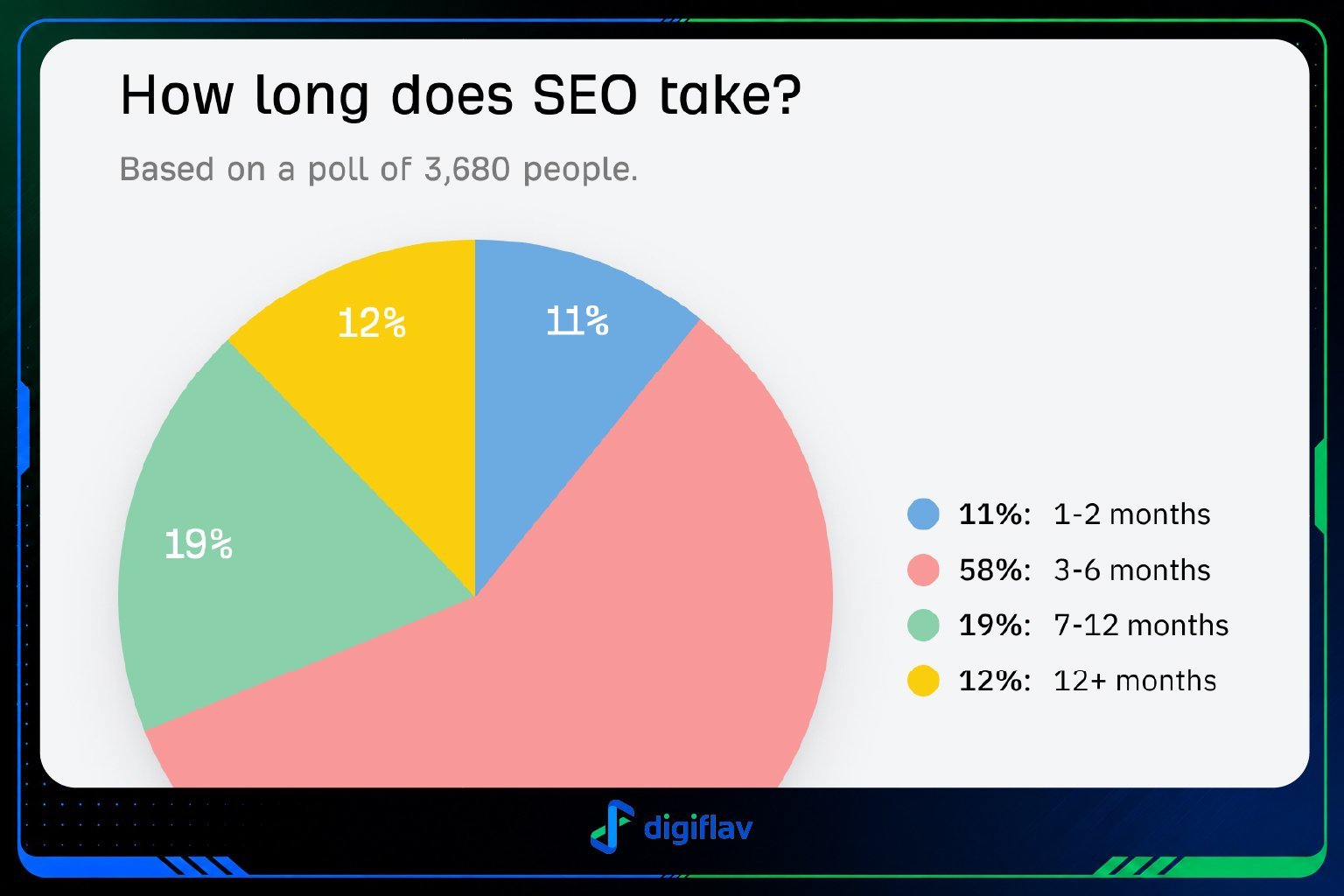
Most businesses begin seeing noticeable SEO improvements within 3 to 6 months, while highly competitive industries may require 6 to 12 months or longer to achieve significant rankings.
However, SEO isn’t about reaching a finish line. It’s an ongoing process that continually improves your website’s visibility, traffic, and lead generation.
Businesses that consistently invest in SEO often experience stronger results year after year.
Why SEO Takes Time
Search engines don’t rank websites based on a single factor.
Google evaluates hundreds of ranking signals, including:
- Website quality
- Content relevance
- User experience
- Page speed
- Backlinks
- Website authority
- Technical SEO
- Mobile responsiveness
Search engines also need time to crawl, index, and evaluate website improvements before rankings begin to change.
SEO is about building trust with both users and search engines.
Factors That Affect SEO Results
Every website is different.
Several factors influence how quickly SEO improvements become visible.
Website Age
Older websites often have an advantage because they’ve already built authority over time.
New websites usually require more time to establish trust with search engines.
Competition
Highly competitive industries naturally require longer SEO campaigns.
For example:
- Law Firms
- Real Estate
- Healthcare
- Digital Marketing
- Finance
These industries compete against established websites with years of SEO investment.
Local businesses operating in smaller markets may achieve results more quickly.
Website Quality
A poorly built website can significantly delay SEO progress.
Important technical factors include:
- Mobile responsiveness
- Fast loading speed
- Secure HTTPS
- Clean website structure
- Easy navigation
Businesses investing in Professional Web Design Services often create stronger SEO foundations from the beginning.
Content Quality
Content remains one of Google’s strongest ranking signals.
Businesses publishing valuable, well-structured content generally perform better than websites with thin or outdated pages.
Effective content includes:
- Service pages
- Blog articles
- Location pages
- FAQs
- Case studies
- Industry resources
Publishing helpful content consistently improves long-term rankings.
Keyword Competition
Not all keywords are equally difficult.
For example:
Ranking for:
“Logo Design”
is much more competitive than:
“Professional Logo Design Services in Texas.”
Targeting realistic keywords often produces faster results.
Typical SEO Timeline
Although every business is unique, the following timeline provides a general expectation.
Month 1
SEO Audit
Activities include:
- Website analysis
- Technical fixes
- Keyword research
- Competitor research
- SEO strategy development
At this stage, rankings usually remain unchanged.
Months 2–3
On-Page Optimization
SEO work typically includes:
- Optimizing page titles
- Meta descriptions
- Content improvements
- Internal linking
- Image optimization
- Website speed improvements
Some keyword movement may begin during this phase.
Months 3–6
Content Growth
Businesses begin publishing:
- Blog articles
- Service pages
- Location pages
- Industry guides
Google starts recognizing increased relevance and authority.
Organic traffic often begins increasing.
Months 6–12
Authority Building
Focus shifts toward:
- Link building
- Content expansion
- Technical improvements
- User experience optimization
Businesses usually experience more consistent ranking improvements during this period.
Why SEO Is Better Than Short-Term Marketing
Unlike paid advertising, SEO continues generating traffic after optimization work has been completed.
Paid ads stop producing traffic when budgets end.
SEO continues attracting visitors through:
- Organic rankings
- Evergreen content
- Search visibility
- Brand authority
This makes SEO one of the highest long-term ROI marketing strategies available.
Common Reasons SEO Takes Longer
Some businesses experience slower progress due to avoidable issues.
Examples include:
- Poor website structure
- Duplicate content
- Thin pages
- Slow website speed
- Low-quality backlinks
- Keyword stuffing
- Inconsistent publishing
Addressing these issues often accelerates future SEO performance.
Technical SEO Matters
Technical SEO provides the foundation for successful rankings.
Businesses should regularly optimize:
- Crawlability
- XML sitemaps
- Structured data
- Core Web Vitals
- Internal linking
- Mobile usability
Technical improvements help search engines understand and index websites more efficiently.
The Importance of Consistent Content
SEO is driven by content.
Publishing regular content demonstrates expertise and keeps websites fresh.
Examples include:
- Industry blogs
- Service guides
- FAQs
- Customer success stories
- Educational resources
Businesses can also strengthen topical authority by connecting related articles using anchor text such as:
- Professional Logo Design Services
- Branding Services
- Custom Website Development Services
- WordPress Website Development
- Local SEO Services
Strategic internal linking improves both user experience and search engine understanding.
Local SEO Can Produce Faster Results
Businesses targeting specific cities often experience faster progress through Local SEO.
Local optimization includes:
- Google Business Profile optimization
- Location pages
- Customer reviews
- Citation building
- Local keyword targeting
For businesses serving local customers, Local SEO can generate qualified leads much sooner than broader national campaigns.
Measuring SEO Success
SEO success isn’t measured only by rankings.
Businesses should also monitor:
- Organic traffic
- Website conversions
- Phone calls
- Form submissions
- Click-through rates
- Local visibility
- Revenue generated
Sometimes rankings improve after traffic begins increasing.
SEO should always focus on business growth—not rankings alone.
Why Businesses Choose DigiFlav for SEO
DigiFlav helps businesses build sustainable organic growth through customized SEO strategies designed around long-term success.
Services include:
- Search Engine Optimization (SEO)
- Local SEO
- Technical SEO
- Content Marketing
- Keyword Research
- Website SEO Audits
- Link Building
- Performance Optimization
Businesses can also strengthen their SEO foundation with DigiFlav’s:
- Professional Web Design Services
- Custom WordPress Development
- Branding Services
- Logo Design Services
By combining technical optimization with high-quality content and modern website development, DigiFlav helps businesses generate consistent organic traffic and qualified leads.
Common SEO Myths
Many businesses misunderstand how SEO works.
Myth 1: SEO Produces Instant Results
SEO requires time and consistency.
Myth 2: SEO Is Done Once
SEO is an ongoing process that evolves with search engine updates.
Myth 3: More Keywords Mean Better Rankings
Modern SEO prioritizes quality content over keyword repetition.
Myth 4: SEO Is Only About Google Rankings
SEO also improves user experience, brand visibility, and lead generation.
Is SEO Worth the Investment?
Absolutely.
SEO remains one of the highest ROI digital marketing strategies because it continues delivering value long after optimization efforts begin.
Benefits include:
- Sustainable traffic
- Better brand visibility
- Higher-quality leads
- Increased credibility
- Long-term business growth
Businesses that remain consistent typically outperform competitors relying only on paid advertising.
Conclusion
SEO is a long-term investment that requires patience, consistency, and the right strategy. While most businesses begin seeing measurable improvements within three to six months, lasting success comes from continuous optimization, quality content, technical improvements, and strong website performance.
Rather than expecting overnight results, businesses should focus on building authority over time. The reward is sustainable organic traffic, increased visibility, and a steady flow of qualified leads.
If you’re ready to grow your online presence, DigiFlav offers professional SEO services designed to help businesses achieve long-term success through customized search engine optimization strategies.
FAQs
1. How long does SEO usually take to show results?
Most businesses begin seeing noticeable SEO improvements within 3 to 6 months, while competitive industries may take longer.
2. Why does SEO take so long?
SEO requires search engines to crawl, evaluate, and build trust in your website over time through quality content, technical optimization, and authority.
3. Can Local SEO produce faster results?
Yes. Local SEO often generates faster improvements because it targets customers searching within specific geographic areas.
4. Does DigiFlav provide complete SEO services?
Yes. DigiFlav offers SEO Services, Local SEO, Technical SEO, Content Marketing, and Website Optimization to help businesses improve search visibility and generate qualified leads.
5. Is SEO better than paid advertising?
SEO provides long-term organic traffic and sustainable growth, while paid advertising generates immediate traffic that stops when the advertising budget ends.
Planning a website, brand or SEO push?
Talk to the team behind this guide. We’ll map the fastest route for your business — no obligation.
✓ Response within 1 business day
✓ Free 45-minute discovery call
✓ Fixed estimates — no surprise invoices